

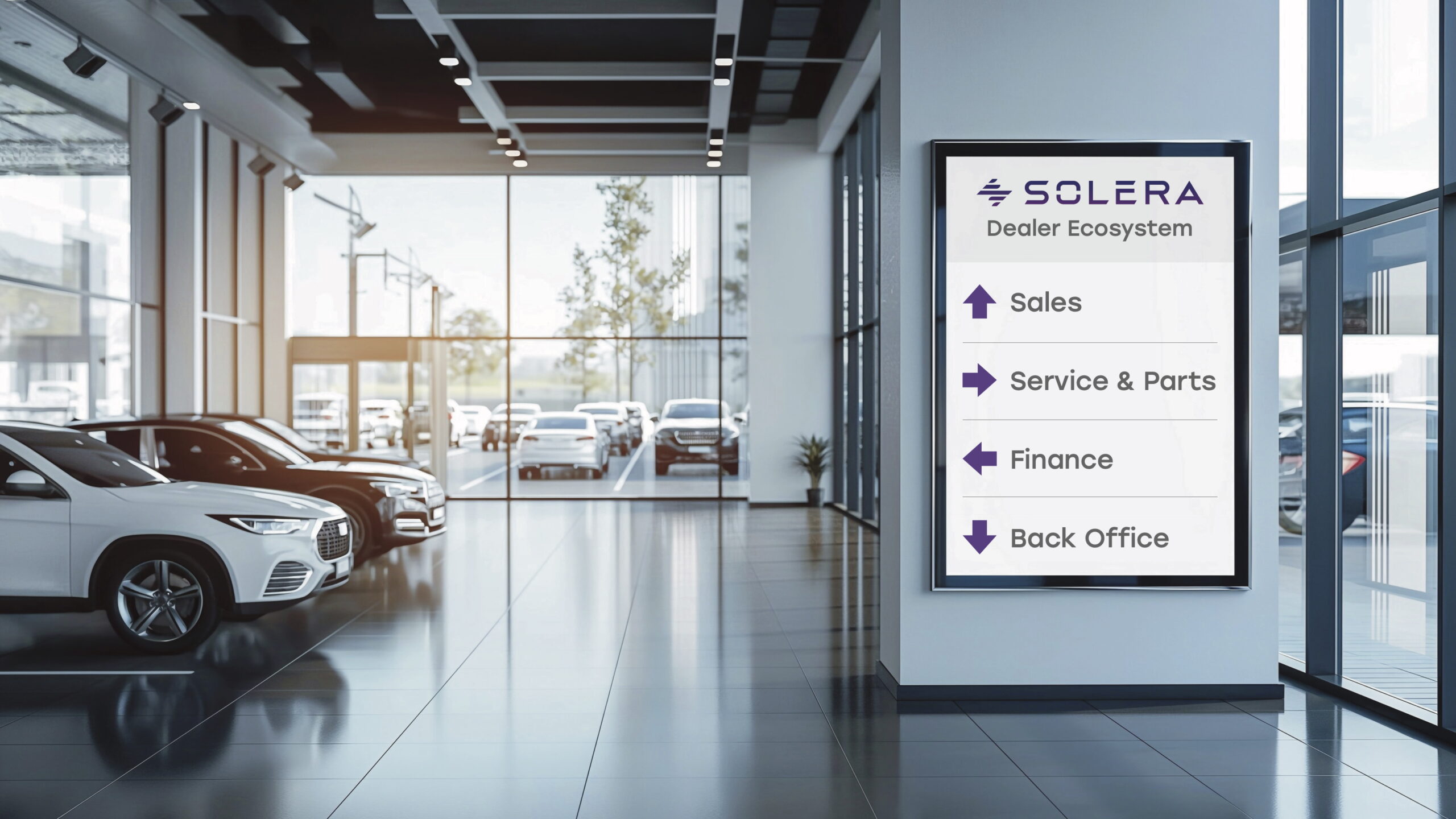
Solera DealerOS connects sales, service, marketing, operations, and the connected vehicle on one customer record and one AI Engine. Deploy the module that hurts most today, add the next when you are ready, and keep everything you already built. No rip and replace, no re-implementation, no swivel chair between vendors.
Most stores are not running a platform. They are running a collection of systems that do not agree with each other.
CRM from one place, DMS from another, marketing from a third, websites from a fourth, titling from a fifth, GPS from a sixth. Every gap between vendors is a handoff that breaks. The customer your CRM captured at 9am becomes a new customer at the service drive that afternoon. The lead your website sent last week was already in the system, but nobody knew. The deal your F&I team closed last month is still waiting on a title.
Adding another tool to that stack does not fix it. It adds one more thing to manage, one more login, one more contract, one more version of the customer. Intelligence layered onto fragmentation only scales the inefficiency.
DealerOS is built in modules so a dealership can start anywhere. What makes it an operating system is what happens after the second module goes live: every product reads from and writes to the same customer, vehicle, and deal record, and every connected workflow teaches the Solera AI Engine. The platform you run next quarter is worth more than the one you run today, with no new vendor and no re-implementation.
Take one module. The CRM that keeps losing follow-up, the service drive that leaks revenue, the title work stacking up in the back office. It does its job on day one, on its own.
Add the next module and it lands on the record already there. No re-entry, no rebuild, no migration project. Each addition removes a handoff instead of creating one.
Connected modules produce connected lifecycle signals, and those signals are what the AI Engine learns from. The longer the store runs, the sharper the system gets at the work in front of it.
Every module solves a real problem the day it goes live. What separates DealerOS is the second line on each card: what that module gives to the rest of the store, and what the rest of the store gives back to it.

Respond faster. Prioritize smarter. Sell more. Lead capture, guided workflows, desking, and a 360 degree customer view that keeps every rep on the same playbook.

The operational core of the store. Accounting, F&I, parts, payroll, and reporting with integrative, customizable workflows and open integrations.
Modular fixed ops: scheduling, check-in, inspection, shuttle, pickup and delivery, mobile technician. Service Scheduling reduces no-shows to under 1%, and Vehicle Pickup & Delivery carries a 45% proven RO profitability increase.

Multichannel campaigns across paid search, digital, email, and postcards, plus Service Journey programs that bring dormant customers back. Fully integrated marketing and support is unique to Solera.

OEM-compliant, mobile-first dealership sites engineered to convert, with merchandising that reflects the lot instead of last week's feed.

Source, appraise, price, and merchandise using real transactional data alongside market listings, with aging and trade-up insight built in.

Direct state agency connections, real-time title, registration fee, and tax calculation at the desk, e-signature, and nationwide coverage.

With LoJack for Law Enforcement, LoJack is the only system integrated directly with law enforcement. Lot Management reduces vehicle purchase time by 30 minutes and improves inventory audits by up to 300%.
One shopper, one household, one vehicle, one history, visible to marketing, sales, F&I, the back office, and the service drive at the same moment. This is the layer a bolt-on tool cannot reach, and it is the reason each new DealerOS module makes the ones already running better.

The first click, the first form, and the first campaign response all open the same record rather than three of them.
Deal structure, exact title and registration fees, and funding status live where the deal is worked, not in a separate tool.
Every repair order, inspection, and declined service writes back, so the next conversation starts informed.
Equity, lease-end, and ownership history surface the next opportunity from customers the store already earned.
Almost every modern dealership pain traces back to the same root cause: too many vendors holding too many pieces of the same customer. Line the two models up and the difference is not subtle.

The AI Engine is not a separate product to adopt. It sits on the connected lifecycle signals DealerOS is already producing and shows up inside the tools the team uses every day, which is the only place intelligence actually gets used.
That is also why the modules matter. Every module you connect gives the engine another view of the same customer and the same vehicle, and every month you run adds history behind it.

Stop paying six vendors to fix the gaps between six vendors. One platform, one set of numbers, one accountable team, and an investment that is worth more each quarter instead of a stack that costs more each renewal.
Mobile desking, CRM-driven follow-up, and real-time title, registration fee, and tax calculation at the closing desk. Deals close once, fund faster, and the customer leaves with the right number on the contract.

Scheduling, check-in, inspection, and transportation on one modular suite. Service Scheduling reduces no-shows to under 1%, and Vehicle Pickup & Delivery carries a 45% proven RO profitability increase.
Solera is building DealerOS in the open, one connected module at a time, with dealers running it as it comes together. Start with the workflow costing you the most today. Every module you add after that makes the one you started with worth more.
See the platform
Every store has a different worst problem. DealerOS is built so you can solve that one first, prove it, and then extend. The second module is a configuration, not a project, because the record it needs is already there.

Start with the customer record. Response time, follow-up discipline, and desking all live in one place, and every later module inherits the history it creates.
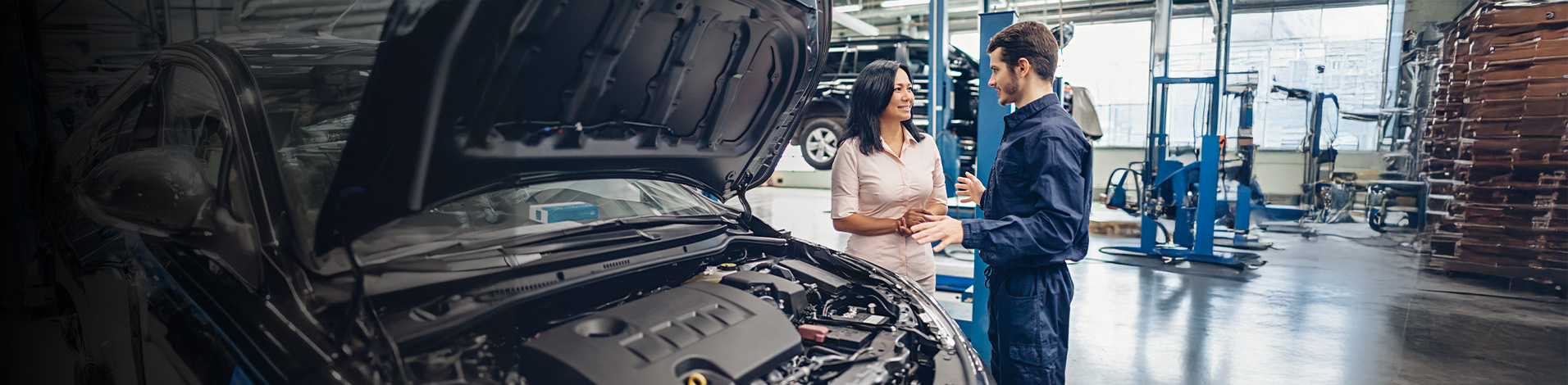
Start where the recurring revenue is. Scheduling, check-in, inspection, and transportation on one modular suite, adopted at the pace the shop can absorb.
Start with the spine. When the DMS and the paperwork are on the platform, every department in front of them stops waiting on a re-keyed number.
A stack hands the customer from system to system and loses something at every seam. DealerOS carries the same record the whole way, so each phase starts where the last one ended.
The loop closes on itself. Every trip through it adds history the next trip gets to use.
Add a tool to a stack and you get one more tool. Add a module to DealerOS and every module already running gets something new to work with. These are the connections dealers feel first.
The service visit is a sales signal. Equity, declined work, and visit history surface in the same place the sales team already works.
Title and registration fees are exact at the desk instead of estimated, and funding status writes back into the deal the moment it clears.
Campaigns are built from live customer and repair order data, then report back on who actually walked in and what they spent.
One price, one photo set, one description across the lot, the showroom, and the site, updated the minute anything changes.
Every form and every browsing behavior lands on the record before the first call, so the first conversation already has context.
The vehicle keeps reporting after delivery, feeding location, condition, and lifecycle signals back to the people who sold and service it.
No-show rate with Service Scheduling, so the lane runs on a schedule the store can staff to.
Proven repair order profitability increase with Vehicle Pickup and Delivery.
Improvement in inventory audits with Lot Management, alongside 30 minutes less vehicle purchase time.
Figures reflect dealership results reported across Solera Dealer Solutions programs and are not a guarantee of individual store performance.
The AI Engine is not a separate product to adopt. It sits on the connected lifecycle signals DealerOS is already producing and shows up inside the tools your team uses every day, which is the only place intelligence actually gets used.
That is why the modules matter and why time on the platform matters. A bolt-on tool cannot get smarter, because it has nothing to learn from.

Pick the one your store needs first. Every page below is a module of Solera DealerOS, connected on day one to the record the rest of the store runs on.
Lead capture, guided follow-up, desking, and one customer view for the whole store.
Explore CRMAccounting, F&I, parts, payroll, and reporting on one operational core.
Explore DMSScheduling, check-in, inspection, shuttle, pickup and delivery, and mobile technician.
Explore Service SuiteMultichannel campaigns and Service Journey programs built on live dealership data.
Explore MarketingOEM-compliant, mobile-first dealership sites engineered to convert.
Explore WebsitesSource, appraise, price, and merchandise with real transactional market data.
Explore InventoryDirect state agency connections, exact fees, e-signature, and nationwide coverage.
Explore TitlingLaw enforcement integrated recovery, connected vehicle programs, and Lot Management.
Explore LoJack
Solera DealerOS connects CRM, DMS, Service Suite, Marketing, Websites, Inventory, Titling, and LoJack on one customer record and one AI Engine. Start with the module costing you the most today. Everything you add after that makes the one you started with worth more, with no new vendor and no re-implementation.
See the platform
